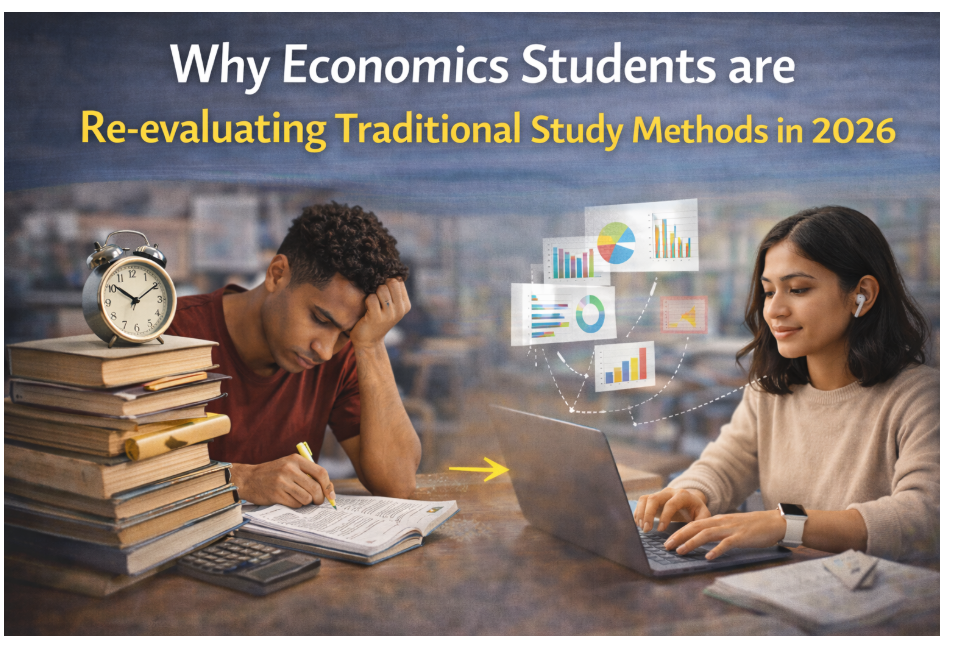
The academic landscape for social sciences, particularly economics, has shifted dramatically over the last few years. Gone are the days when a thick textbook and a basic calculator were enough to carry a student through their undergraduate degree. Today, the global economy moves at the speed of an algorithm, and the methods used to study it must keep pace. We are seeing a massive trend where students are moving away from passive rote memorization and toward more dynamic, tech-integrated, and professionally guided learning strategies.
Modern classrooms are no longer just about supply and demand curves drawn on a whiteboard. With the rise of big data and predictive modeling, students are finding that their curriculum is becoming increasingly technical. Many find that specialized economics writing assignment help from experts at MyAssignmentHelp allows them to bridge the gap between abstract academic theories and the real-world data analysis required in 2026. This shift isn’t just about getting better grades; it is about survival in a job market that demands immediate practical application of complex fiscal concepts.
The Death of Rote Memorization
For decades, economics was taught through the memorization of formulas and historical case studies. However, in a world where the “next big economic shift” happens every quarter, memorizing a 2010 textbook is no longer sufficient. Students are now prioritizing “Conceptual Agility”—the ability to take a core economic principle and apply it to a brand-new scenario, such as the impact of decentralized finance or AI-driven market volatility.
Traditional methods often fail to provide the “why” behind the “what.” This has led to a surge in interactive learning, where students use simulators and real-time market tracking. When the workload becomes overwhelming, seeking a professional online assignment solution through MyAssignmentHelp has become a common strategy for maintaining high standards while focusing on these high-level practical skills. By delegating the more repetitive drafting tasks, students can spend more time in the “sandbox” of economic experimentation.
The Rise of Hybrid Learning Models
The “all-or-nothing” approach to attending physical lectures is fading. Undergraduate students across the globe are embracing hybrid models that combine university lectures with specialized external resources. This isn’t just about convenience; it’s about depth. A university professor might cover the broad strokes of Keynesian economics, but a student might need a deep dive into how that specifically applies to emerging markets in Southeast Asia or the Middle East.
Comparing Study Methods: Traditional vs. Modern (2026)
| Feature | Traditional Study Methods | Modern/Hybrid Study Methods |
| Primary Resource | Physical Textbooks & Printed Journals | Real-time Data APIs & Interactive Modules |
| Focus Area | Historical Theory & Formula Memorization | Predictive Modeling & Real-world Application |
| Support System | Limited Office Hours & Peer Study Groups | 24/7 Professional Guidance & Digital Solutions |
| Feedback Loop | End-of-Semester Exams | Continuous Assessment & Expert Reviews |
| Technical Integration | Basic Excel/Calculators | Python, R-Programming, and AI-Analysis |
The Data-Driven Undergraduate
Today’s economics student is essentially a data scientist in training. The integration of Python and R into standard economics curricula has changed the “study” process from reading to coding. This technical barrier is one of the main reasons students are re-evaluating how they spend their time. If a student spends twelve hours struggling with a coding error in an econometrics project, they lose twelve hours of critical thinking time.
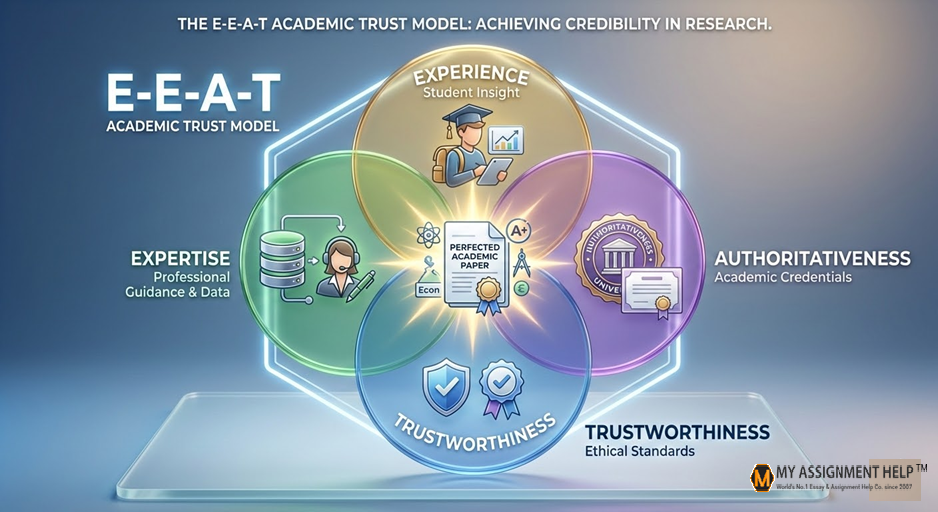
To combat this, the “Modern Student” uses a strategic mix of resources. They utilize university libraries for primary research but lean on professional academic consultants to help structure their findings into cohesive, high-scoring papers. This collaborative approach ensures that the final output meets the rigorous “E-E-A-T” (Experience, Expertise, Authoritativeness, and Trustworthiness) standards that both professors and search engines now demand.
Why Quality Over Quantity is Winning
In the past, students would try to write as much as possible, hoping to hit a word count. In 2026, clarity is the new currency. Academic supervisors are looking for “PEEL” paragraphs (Point, Evidence, Explanation, Link) that demonstrate a deep, nuanced understanding of the topic. This move toward “Lean Writing” is a direct result of the corporate world’s influence on academia—employers want graduates who can summarize a 100-page economic report into a two-page executive summary.
Ethical Use of Academic Support
There is a growing conversation around the “Responsible Use of AI” and professional services. The most successful students are those who use these tools not to bypass learning, but to enhance it. They use external solutions as a “blueprint” or a “mentor’s draft” to understand how a perfect paper should be structured, what sources should be cited, and how to maintain a professional, academic tone throughout.
Conclusion: The Future of the Economics Degree
The re-evaluation of study methods is a sign of a maturing academic environment. Economics is no longer a “static” subject; it is a living, breathing entity that changes with every political shift and technological breakthrough. Students who stick solely to the methods of twenty years ago find themselves left behind. By embracing hybrid support, focusing on data literacy, and prioritizing conceptual understanding over memorization, the modern economics student is better prepared for the professional world than ever before.
Frequently Asked Questions (FAQ)
1. Why is economics becoming more difficult for undergraduate students?
The subject is shifting from purely theoretical to highly technical, requiring students to master data science tools, coding (like R or Python), and complex mathematical modeling alongside traditional theory.
2. Is it common for students to use online assignment services?
Yes, in 2026, many students use professional services to manage heavy workloads and ensure their papers meet the high academic standards required for competitive job markets.
3. How can I improve my economics grades without burnout?
Focus on “active recall” and “spaced repetition” for theories, and don’t be afraid to use professional resources to help with structural formatting and complex data interpretation.
4. Does Google prioritize “Human-written” content in academic blogs?
Absolutely. Google’s latest updates emphasize “Helpful Content” that shows real expertise and experience, rather than generic, AI-generated fluff.
5. What is the most important skill for an economics student in 2026?
Analytical adaptability—the ability to look at a new set of data and determine which economic model best explains the current trend.
About The Author| Emma Jones
“I am an academic consultant and research documentation specialist with over eight years of experience helping students navigate the complexities of higher education. My work focuses on bridging the gap between theoretical curricula—particularly in high-stakes fields like economics and business—and real-world professional application.