
Business
Demolition Company in Dubai Safe & Professional Building Removal


Introduction
Removing old buildings or structures can be a big task. A demolition company in Dubai makes this process safe, fast, and organized. They help property owners, businesses, and developers clear space for new construction or renovations.
Professional teams handle all types of projects, from small interior walls to large villas and commercial buildings. They use strong machines, proper tools, and follow safety rules. Good planning and skilled workers make sure nothing nearby gets damaged and the work finishes on time.
Many people hire demolition services Dubai when they want a smooth and worry-free experience. For example, if someone is renovating an old office, the demolition company will remove walls and debris without affecting the rest of the building. In simple words, hiring the right demolition company ensures the site is prepared safely for new construction or improvements.
What Does a Demolition Company in Dubai Do?
A demolition contractor Dubai helps remove old or unsafe buildings so new construction can start. Their role goes beyond just knocking down walls. They plan the work carefully, inspect the building, and make sure everyone around is safe. Demolition companies work on all kinds of structures, from small houses and offices to large commercial buildings.
They also use specialized equipment and machinery to handle tough jobs. Excavators, concrete breakers, cutting tools, and trucks help remove heavy materials safely. Skilled operators control the machines so that walls, floors, and slabs come down without damaging nearby structures.
1. Common Tasks Handled by Demolition Companies
A professional demolition company in Dubai does more than just tear buildings down. They also handle demolition debris removal, making the site clean and ready for new construction. Common tasks include:
- building demolition
- wall removal
- slab removal
- site clearance
By taking care of these tasks, a demolition company makes sure the project is safe, efficient, and ready for the next phase. Whether it’s a small interior renovation or a large villa demolition, hiring experts ensures the work is done right.
Types of Demolition Services Offered

A reliable demolition company in Dubai offers different services depending on the type of building and project needs. Using the right service ensures the work is safe, efficient, and meets all local regulations. Here are the main types of demolition services in Dubai.
1. Residential Demolition
Residential demolition focuses on homes and villas. Whether it’s a small house demolition Dubai or a large villa demolition Dubai, the team carefully removes walls, slabs, and old structures without harming neighboring properties. Contractors plan each step to keep the project safe and on schedule. For example, a villa in Jumeirah may need selective demolition for an extension, which requires precise machinery and skilled operators.
2. Commercial Demolition
Commercial projects need experienced contractors who handle bigger structures. Commercial demolition services Dubai include removing office buildings, warehouses, and retail spaces. Professional building demolition contractors use heavy machinery like excavators and concrete cutters to ensure the work is fast, safe, and clean. These projects also often require planning to minimize disruption to nearby businesses.
3. Interior Demolition
Interior demolition is for renovations and remodeling inside buildings. Teams perform interior demolition Dubai by removing walls, ceilings, or floors carefully. Wall demolition services are common for offices or apartments where the rest of the structure must remain intact. Proper planning and cleanup ensure the space is ready for the next phase of construction.
By hiring a skilled demolition company in Dubai, property owners can choose the service that fits their project, from small interior changes to full residential or commercial building removal.
Step-by-Step Demolition Process
Hiring the best demolition company in Dubai ensures that your project is handled safely and efficiently. Understanding the demolition process Dubai helps property owners know what to expect and how the work is done. Professional teams follow clear steps to provide safe demolition services UAE for homes, offices, and commercial buildings.
1. Step 1 Site Inspection
Before any demolition begins, a thorough demolition site inspection is done. Contractors check the building and perform a structural assessment to understand which areas are strong, weak, or hazardous. This step ensures the demolition plan is safe for workers and nearby properties.
2. Step 2 Permit & Planning
After inspection, the team applies for a demolition permit in Dubai and gets demolition approval from the UAE from local authorities. Proper planning includes identifying utilities like electricity, water, and gas to avoid accidents. Licensed contractors handle the paperwork so the project follows all rules.
3. Step 3 Demolition Work
Once permits are approved, the demolition team starts the work. They use concrete demolition Dubai equipment and mechanical demolition tools to safely remove walls, floors, and other structures. Skilled operators control the machinery to prevent damage to nearby buildings.
4. Step 4 Debris Removal
After the structures are removed, the company handles demolition waste removal and construction debris disposal. This keeps the site clean and ready for the next phase of construction or renovation. Using the best demolition company in Dubai ensures every step is done safely and efficiently, from start to finish.
Do You Need a Demolition Permit in Dubai?
Yes, most demolition projects in Dubai require a demolition permit. Local rules are strict to make sure buildings are removed safely and no one gets hurt. These rules are part of the demolition regulations of the UAE, which cover safety, planning, and environmental considerations.
Before starting work, contractors must submit plans showing how they will safely remove structures. This includes checking utilities like water, electricity, and gas. Licensed demolition companies in Dubai usually handle this paperwork, so property owners don’t have to worry about the process.
1. Authorities That Approve Demolition
The main authority that issues approvals is the Dubai Municipality demolition permit office. They review plans and safety measures before granting a building demolition approval to Dubai.
For example, if someone wants to demolish an old villa in Dubai Marina, the contractor submits a plan and gets approval first. Only after the permit is issued can the demolition team safely start the work. This ensures the project follows all rules and protects nearby properties.
How to Choose the Best Demolition Company in Dubai

Finding a licensed demolition contractor Dubai is important for a safe and smooth project. The right team ensures your building is removed properly, on time, and without damaging nearby properties. demolition services in Dubai use skilled operators, modern equipment, and follow all safety rules.
1. Things to Check Before Hiring
Before you hire a company, make sure they are experienced and reliable. Look for:
- Licenses and permits, They should be legally allowed to handle demolition in Dubai.
- Equipment quality, Modern machines help complete projects faster and safer.
- Safety procedures, Proper planning and precautions keep workers and nearby properties safe.
- Past projects, Check reviews or examples of previous demolitions.
For example, a renovation demolition in a Dubai office building required careful interior wall removal without affecting the rest of the structure. The contractor used proper machinery and safety barriers, finishing the project efficiently.
By checking these points, you can choose an experienced demolition contractor and make sure your project is handled professionally and safely.
Contact Us, Demolition Company in Dubai
If you’re looking for a reliable demolition company in Dubai, MYTS Technical Services is here to help. We provide professional demolition services Dubai for homes, offices, and commercial buildings.
Our team handles everything safely and efficiently, from planning to debris removal. We follow all local regulations and use the right equipment for every project.
Contact us today to get a free quote or consultation. Let our experts take care of your demolition project so you can focus on your next construction or renovation.
Conclusion
Hiring the right demolition company in Dubai is important for safety, efficiency, and a smooth project. Professional teams handle everything from planning and permits to debris removal. Whether it’s a villa demolition Dubai, commercial building, or interior renovation, experts use proper equipment and follow local regulations to protect your property and neighbors.
By choosing a licensed and experienced contractor, you can save time, avoid risks, and ensure the demolition is done correctly. With services like professional demolition services Dubai, your site will be ready for the next phase of construction or renovation without any hassle.
FAQs About Demolition Companies in Dubai
Here are some common questions about hiring a demolition contractor Dubai and using demolition services UAE.
1. How long does demolition take in Dubai?
The time depends on the building size and type. Small interior jobs can take a day or two, while larger villas or commercial buildings may take several weeks. Proper planning helps finish the work safely and on time.
2. How much does demolition cost in Dubai?
Costs vary depending on the project size, complexity, and materials. A licensed demolition company in Dubai can give a detailed estimate after inspecting the site.
3. What equipment is used for demolition?
Contractors use excavators, concrete breakers, cutting tools, and trucks to remove structures safely. Skilled operators ensure walls and slabs are taken down efficiently without harming nearby areas.
4. Do demolition contractors remove debris?
Yes, most companies handle demolition debris removal, cleaning the site and disposing of waste properly. This makes the property ready for new construction or renovation.
5. Do I need a demolition permit in Dubai?
Yes, permits are required for most projects. A licensed contractor usually helps get the approval from authorities like the Dubai Municipality, ensuring the work follows all demolition regulations UAE.


The academic landscape for social sciences, particularly economics, has shifted dramatically over the last few years. Gone are the days when a thick textbook and a basic calculator were enough to carry a student through their undergraduate degree. Today, the global economy moves at the speed of an algorithm, and the methods used to study it must keep pace. We are seeing a massive trend where students are moving away from passive rote memorization and toward more dynamic, tech-integrated, and professionally guided learning strategies.
Modern classrooms are no longer just about supply and demand curves drawn on a whiteboard. With the rise of big data and predictive modeling, students are finding that their curriculum is becoming increasingly technical. Many find that specialized economics writing assignment help from experts at MyAssignmentHelp allows them to bridge the gap between abstract academic theories and the real-world data analysis required in 2026. This shift isn’t just about getting better grades; it is about survival in a job market that demands immediate practical application of complex fiscal concepts.
The Death of Rote Memorization
For decades, economics was taught through the memorization of formulas and historical case studies. However, in a world where the “next big economic shift” happens every quarter, memorizing a 2010 textbook is no longer sufficient. Students are now prioritizing “Conceptual Agility”—the ability to take a core economic principle and apply it to a brand-new scenario, such as the impact of decentralized finance or AI-driven market volatility.
Traditional methods often fail to provide the “why” behind the “what.” This has led to a surge in interactive learning, where students use simulators and real-time market tracking. When the workload becomes overwhelming, seeking a professional online assignment solution through MyAssignmentHelp has become a common strategy for maintaining high standards while focusing on these high-level practical skills. By delegating the more repetitive drafting tasks, students can spend more time in the “sandbox” of economic experimentation.
The Rise of Hybrid Learning Models
The “all-or-nothing” approach to attending physical lectures is fading. Undergraduate students across the globe are embracing hybrid models that combine university lectures with specialized external resources. This isn’t just about convenience; it’s about depth. A university professor might cover the broad strokes of Keynesian economics, but a student might need a deep dive into how that specifically applies to emerging markets in Southeast Asia or the Middle East.
Comparing Study Methods: Traditional vs. Modern (2026)
| Feature | Traditional Study Methods | Modern/Hybrid Study Methods |
| Primary Resource | Physical Textbooks & Printed Journals | Real-time Data APIs & Interactive Modules |
| Focus Area | Historical Theory & Formula Memorization | Predictive Modeling & Real-world Application |
| Support System | Limited Office Hours & Peer Study Groups | 24/7 Professional Guidance & Digital Solutions |
| Feedback Loop | End-of-Semester Exams | Continuous Assessment & Expert Reviews |
| Technical Integration | Basic Excel/Calculators | Python, R-Programming, and AI-Analysis |
The Data-Driven Undergraduate
Today’s economics student is essentially a data scientist in training. The integration of Python and R into standard economics curricula has changed the “study” process from reading to coding. This technical barrier is one of the main reasons students are re-evaluating how they spend their time. If a student spends twelve hours struggling with a coding error in an econometrics project, they lose twelve hours of critical thinking time.
To combat this, the “Modern Student” uses a strategic mix of resources. They utilize university libraries for primary research but lean on professional academic consultants to help structure their findings into cohesive, high-scoring papers. This collaborative approach ensures that the final output meets the rigorous “E-E-A-T” (Experience, Expertise, Authoritativeness, and Trustworthiness) standards that both professors and search engines now demand.
Why Quality Over Quantity is Winning
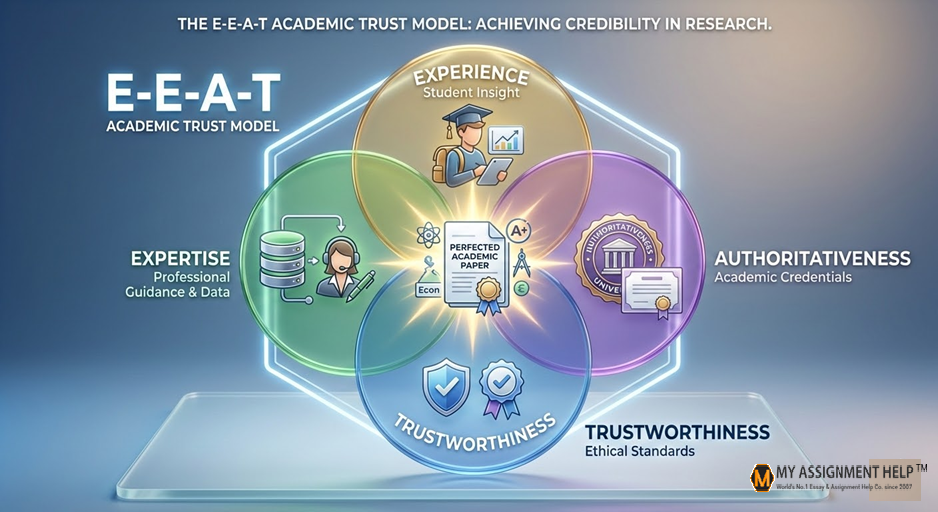
In the past, students would try to write as much as possible, hoping to hit a word count. In 2026, clarity is the new currency. Academic supervisors are looking for “PEEL” paragraphs (Point, Evidence, Explanation, Link) that demonstrate a deep, nuanced understanding of the topic. This move toward “Lean Writing” is a direct result of the corporate world’s influence on academia—employers want graduates who can summarize a 100-page economic report into a two-page executive summary.
Ethical Use of Academic Support
There is a growing conversation around the “Responsible Use of AI” and professional services. The most successful students are those who use these tools not to bypass learning, but to enhance it. They use external solutions as a “blueprint” or a “mentor’s draft” to understand how a perfect paper should be structured, what sources should be cited, and how to maintain a professional, academic tone throughout.
Conclusion: The Future of the Economics Degree
The re-evaluation of study methods is a sign of a maturing academic environment. Economics is no longer a “static” subject; it is a living, breathing entity that changes with every political shift and technological breakthrough. Students who stick solely to the methods of twenty years ago find themselves left behind. By embracing hybrid support, focusing on data literacy, and prioritizing conceptual understanding over memorization, the modern economics student is better prepared for the professional world than ever before.
Frequently Asked Questions (FAQ)
1. Why is economics becoming more difficult for undergraduate students?
The subject is shifting from purely theoretical to highly technical, requiring students to master data science tools, coding (like R or Python), and complex mathematical modeling alongside traditional theory.
2. Is it common for students to use online assignment services?
Yes, in 2026, many students use professional services to manage heavy workloads and ensure their papers meet the high academic standards required for competitive job markets.
3. How can I improve my economics grades without burnout?
Focus on “active recall” and “spaced repetition” for theories, and don’t be afraid to use professional resources to help with structural formatting and complex data interpretation.
4. Does Google prioritize “Human-written” content in academic blogs?
Absolutely. Google’s latest updates emphasize “Helpful Content” that shows real expertise and experience, rather than generic, AI-generated fluff.
5. What is the most important skill for an economics student in 2026?
Analytical adaptability—the ability to look at a new set of data and determine which economic model best explains the current trend.
About The Author| Emma Jones
“I am an academic consultant and research documentation specialist with over eight years of experience helping students navigate the complexities of higher education. My work focuses on bridging the gap between theoretical curricula—particularly in high-stakes fields like economics and business—and real-world professional application.
Business
Manoj Negi – SEO Expert India: Mastering Digital Growth with AI, Data, and Real-World Strategies


In the dynamic realm of digital marketing, where visibility on search engines can determine a business’s trajectory, Manoj Negi emerges as a distinguished SEO expert in India. With a career spanning more than 14 years, Negi has dedicated himself to crafting strategies that not only elevate online presence but also drive measurable growth for diverse clients. His work underscores the importance of ethical, data-informed practices in an industry often challenged by rapid algorithmic changes and competitive pressures.
Professional Background
Negi’s professional journey reflects a solid foundation in education and technical proficiency. He holds a graduate degree from Delhi University, complemented by a DOEACC “A” level certification from the National Institute of Electronics & Information Technology (NIELIT). This academic background provided him with a strong grasp of information technology, which he has seamlessly integrated into his SEO expertise.
Over the years, he has accumulated hands-on experience across various sectors, including education, e-commerce, healthcare, and finance. This breadth of exposure allows him to understand the unique demands of different industries, enabling tailored solutions that align with specific business goals.
Certifications and Expertise
A hallmark of Negi’s credibility lies in his array of professional certifications. He is a certified specialist from HubSpot Academy, Google Ads Search, and SEMrush Academy, with specializations in SEO strategy, international SEO, and Google Analytics.
These credentials affirm his commitment to staying abreast of industry standards and best practices. As a Google-certified digital marketing professional, Manoj Negi – SEO Expert India emphasizes white-hat SEO techniques that comply with search engine guidelines, ensuring long-term sustainability for his clients’ online efforts. His expertise extends beyond basic optimization to encompass advanced areas such as PPC management and technical audits, making him a versatile asset in the digital marketing ecosystem.
Comprehensive SEO Services
Negi offers a comprehensive suite of services designed to address every facet of SEO. At the core is a thorough SEO audit, which examines website structure, performance, and content to identify areas for improvement.
This is followed by strategic keyword research, focusing on high-value terms that attract qualified traffic while minimizing competition. On-page optimization forms another key pillar, involving refinements to meta tags, headings, images, and internal links to enhance user experience and search rankings.
For businesses with a local focus, Negi provides specialized local SEO services, optimizing for “near me” searches in cities like Delhi, Jaipur, and Bangalore. This includes managing Google Business Profiles and building local citations to boost visibility in regional markets.
Technical SEO Focus
Technical SEO is where Negi’s technical background shines. He tackles issues such as page speed, mobile responsiveness, and indexing errors, ensuring sites are fully optimized for search engines.
Content strategy and optimization are equally emphasized, with an approach that aligns material with user intent to foster engagement and authority. Off-page efforts involve ethical link-building from reputable sources, while performance tracking delivers ongoing insights through detailed reports on rankings, traffic, and conversions.
Competitive analysis rounds out his offerings, helping clients uncover opportunities by studying rivals’ tactics. For those new to SEO, Negi generously provides a free 100-step checklist tailored for Indian businesses, demonstrating his dedication to empowering others in the field.
Notable Achievements
Negi’s track record is bolstered by notable achievements that highlight his impact. He has served over 102 clients, achieving a 98% success rate in improving rankings, traffic, and leads.
In one compelling case, he transformed the digital footprint of a tuition center, increasing clicks by 72% from 31,400 to 54,200 and impressions by 203% from 378,000 to 1.15 million within six months.
This was accomplished through targeted content creation, technical enhancements, and precise on-page adjustments. Other successes include a 300% surge in organic traffic for clients like Singapore Asia Publishers and MDIS, where he secured top-page rankings for key keywords and boosted enrollment leads by 18%.
His work with Amity Global Institute resulted in 60% of targeted keywords appearing on Google’s first page, underscoring his ability to deliver quantifiable outcomes.
Innovative Approach with AI and Data
What sets Negi apart is his forward-thinking integration of data, artificial intelligence, and strategic planning in SEO. In a landscape increasingly influenced by AI, he leverages these tools to analyze user behavior, predict trends, and refine campaigns for optimal results.
This approach not only enhances efficiency but also ensures strategies remain adaptable to algorithm updates. Negi’s philosophy centers on ethical practices and long-term growth, with a 95% client retention rate reflecting the trust he builds through transparent, results-oriented partnerships.
He has managed budgets exceeding $5 million in Google Ads, further illustrating his proficiency in scaling digital initiatives.
Community Contributions
Beyond client work, Negi contributes to the broader SEO community through his blog and industry recognition. His website features insightful articles, such as “How an SEO Expert Ranks Websites in 90 Days” and “10 Red Flags to Watch Out for When Hiring an SEO Expert,” offering practical guidance to aspiring professionals and business owners.
In his own ranking of India’s top SEO experts for 2026, he positions himself prominently, highlighting his specialization in local and EdTech SEO.
Publications like PTI News and The Hans India have featured his innovative methods, affirming his status as a thought leader in India’s digital marketing scene.
Manoj Negi’s contributions extend to fostering accessible digital growth, particularly for small and medium enterprises in India. By offering free consultations and resources, he democratizes SEO knowledge, helping businesses navigate the complexities of online visibility. His address in Gautam Budh Nagar, Uttar Pradesh, and availability via phone and email make him approachable for potential collaborators.
Conclusion
In conclusion, Manoj Negi represents the epitome of SEO expertise in India, combining technical acumen, strategic insight, and a client-centric ethos to propel businesses forward. As digital competition intensifies, his methods offer a reliable pathway to sustained success, making him an invaluable partner for those seeking to thrive in the online arena. For organizations aiming to enhance their search presence, exploring Negi’s services could mark the beginning of transformative growth.


Your board wants to know the same thing every quarter: what type and quality of return are we seeing on our digital transformation investment? You’ve invested millions in new platforms, process automation, and changing the shape of your organization. You can sense that things are getting better. But being able to show the numbers to satisfy finance and the executive leadership is still eluding you.
You are not alone, as 89% of large organizations globally are embarking on digital transformation initiatives, but they have only unlocked 31% of the potential revenue benefits and 25% of the potential cost savings. The challenge is measurement. If you can’t measure well, you can’t prove value, you can’t optimize spend, and you can’t sustain transformation initiatives under the microscope.
Why ROI on Digital Transformation Is Harder to Calculate Than a Normal Investment
Calculating the ROI on a new factory machine is straightforward: cost of purchase $500K, it produces 10,000 units a year with a profit of $20 per unit, and it pays for itself in about 2.5 years. Digital transformation, however, is not so straightforward.
The benefits lie in both the tangible outcomes of cost savings through automation, revenue growth through improved customer experience, and process improvements through simplification, as well as the intangible outcomes of faster decision-making, happier employees, increased trust from customers, and increased agility. Most organizations are only interested in the tangible outcomes and, as a result, are missing the point of half the story.
Then there is the issue of the timeline mismatch. Some projects pay dividends in weeks: robotic process automation projects that eliminate manual data entry pay dividends in weeks. Others take a long time-18 to 36 months-to deliver benefits: enterprise platform migrations can be painful before they are beneficial, and organizational cultural shifts to a digital-first decision style take years to take hold.
This means that you cannot delude yourself into thinking that one ROI calculation or one timeline applies to all digital transformation projects. One approach to measurement for automation projects will not work for organizational change initiatives.
Start Here: The Baseline Problem Nobody Talks About
The largest, most deceptive trap in tracking progress: launching funding for transformation projects without first locking in baseline measurements. You can’t measure progress if you don’t know where you began, yet many companies launch without this critical first step.
Without baselines, you’re left with soft assertions such as “customer satisfaction was improved” or “operations are more efficient,” with offers that lack any hard data to support them. When boards of directors ask for proof, you have nothing to show because you never measured the starting point.
What to capture before anything goes live:
- Process cycle times for key workflows
- Error rates and rework frequency
- Customer satisfaction scores (NPS, CSAT) by touchpoint
- Revenue and conversion rates by channel
- Manual hours spent on routine tasks
- System downtime and performance metrics
- Employee productivity measures
Quality digital business consulting services always begin with establishing baselines. Before making pitches, smart consultants plot the current-state performance levels on operational, financial, and experience dimensions. This work provides the foundation for proving transformation value later on; otherwise, ROI assertions remain unproven.
It may seem like drudgery while teams are eager to get into building, but skipping this step renders ROI unprovable regardless of actual progress made.
The Four Metric Categories That Actually Matter
Comprehensive ROI measurement requires tracking across four distinct categories, not just financial returns:
Operational Efficiency Metrics:
- Cycle time reduction for critical processes
- Error rates and quality scores
- Automation rates replacing manual work
- System uptime and reliability
- Processing capacity improvements
Financial Return Metrics:
- Direct cost savings from eliminated processes or reduced labor
- Revenue growth from new digital channels or improved conversion
- Customer acquisition cost reduction
- Customer lifetime value increase
- Working capital improvements from better inventory or receivables management
Customer Experience Metrics:
- Net Promoter Score (NPS) trends
- Customer satisfaction scores (CSAT)
- Self-service adoption rates
- Customer churn reduction
- Support ticket resolution time
- Customer effort scores
Employee and Adoption Metrics:
- Platform adoption rates and active user percentages
- Productivity per employee
- Training time required for new capabilities
- Employee engagement scores
- Voluntary turnover rates
By only looking at financial metrics, there are blind spots. A project that cuts expenses but destroys employee morale or customer happiness may look great on the bottom line in the short term, but it is a betrayal of long-term sustainability.
The Metric Most Executives Ignore – And Why It Kills Transformation Programs
Research indicates that 81% of firms focus on productivity metrics while ignoring the actual rate of adoption and usage of new technology. This is a blind spot that is fatal to transformation initiatives. A system that nobody uses, which provides no return on investment no matter how cool it is, is a disaster waiting to happen.
Adoption rate is a leading indicator, it tells you if the financial payoffs will ever materialize. If adoption is low, your new system is a system that nobody uses, and it provides no return on investment no matter how cool it is. If automation adoption is low, then manual processes are still running in parallel, which defeats the purpose of the automation in the first place.
Immediate action: start measuring adoption for every new system or process that you implement. Establish adoption targets (around 70-80% of the target audience) as part of your success criteria, just like financial success criteria. If adoption is low, investigate immediately, rather than waiting for the financial ROI to materialize, which won’t happen.
If employees resist or the system is difficult to use, and this keeps adoption low, then investigate and correct it. After the financial ROI window has closed and no results have materialized, it is academic-the investment is already written off.
Leading vs. Lagging Indicators: Know Which One You’re Looking At
Knowing the types of indicators will help you determine whether you can really influence transformation programs or only report what has occurred.
Lagging indicators confirm outcomes after they’ve occurred: revenue growth, cost savings, enhanced customer satisfaction. They prove the success but are too late to make any changes to the course. By the time they alert you to problems, much of the investment may be squandered.
Leading indicators predict future outcomes: adoption rates, process adherence, data quality ratings, training completion, user engagement. They emerge early, allowing you to make changes before problems worsen.
Most ROI reports contain only lagging indicators, providing excellent post-analysis but little help in day-to-day management. A sound measurement system combines the best of both: leading indicators for current action and lagging indicators for subsequent confirmation of results.
Immediate action: For every transformation initiative, select 2-3 leading indicators to track monthly and 2-3 lagging indicators to assess quarterly. Use the leading indicators to inform weekly management attention and the lagging indicators to confirm success.
A Simple ROI Formula to Use – And Its Limitations
The basic ROI formula provides a starting point: ROI = (Net Gain from Investment – Cost of Investment) / Cost of Investment
Real example: A company invests $500K in a CRM solution. After 18 months, through enhanced sales pipeline management and enhanced customer retention, the firm generates $1.5M in incremental revenue that can be directly attributed to the CRM solution. The calculation looks like this: ($1.5M – $500K) / $500K = 200% ROI.
However, this ROI formula has a weakness: it doesn’t account for intangible value. The CRM solution also improves sales forecasting, reduces the time spent on administrative tasks, and enhances customer segmentation capabilities-areas of value that are difficult to measure but still highly valuable.
Total Cost of Ownership (TCO) provides a more complete view by accounting for all costs: software licensing fees, implementation costs, internal personnel costs during the implementation phase, training, change management, and the temporary loss of productivity during the implementation phase, which is often underappreciated.
Many times, the transformation will appear to have a negative ROI if measured solely against the value of the software, but will turn positive when measured against the full value and total costs over the appropriate time horizon.
How Often Should You Be Measuring – And Who Should Own It
ROI analysis should be integrated into the project timeline, rather than being relegated to overwhelmed post-launch reports that come too late to impact change.
Recommended cadence:
- Monthly: Operational efficiency metrics and leading indicators (adoption, usage, process compliance)
- Quarterly: Financial metrics and customer experience scores
- Annually: Strategic KPIs and program-level ROI assessment
Responsibility rests with cross-functional teams, not solely with IT. Digital business consulting best practices often include governance structures that combine IT for technical metrics, finance for cost and revenue analysis, operations for efficiency, and customer success for experience metrics.
IT alone provides blind spots for business impact. Business metrics alone provide blind spots for technical health and sustainability.
The digital marketing firm Eyal Dror Consulting includes baseline measurements before any implementation in their initial approach, assigns specific metric ownership to cross-functional teams, and constructs dashboards that provide visibility into both leading and lagging indicators. This provides for ROI analysis that is an integral part of operations, not an afterthought.
Immediate action: Assign specific executives to own each set of metrics. Add specific items to monthly operating reviews for leading indicators and quarterly reviews for financial results.
Conclusion: The Businesses Winning at Digital Transformation Measure Differently – Not More
The essential difference between successful transformation initiatives and expensive failures is not the number of metrics you track, but rather how you approach them. Best-in-class programs establish baselines before they start, balance hard metrics and softer value, track leading indicators that give them early warning, and measure in operations, finance, experience, and adoption. They also link measurement to governance so that someone is responsible.
Far more importantly, they treat ROI measurement as a means for managing the business on a day-to-day basis, rather than as a means for financial reporting. It’s not primarily about communicating value to boards, although that’s important too. It’s about providing early warning systems and a way to continually optimize.

Demolition Company in Dubai Safe & Professional Building Removal

Top 7 Data Science Courses for Job-Ready Analytics and AI Roles in 2026

SEO by HighSoftware99.com – Rank Higher Today
Top 7 Data Science Courses for Job-Ready Analytics and AI Roles in 2026
SEO by HighSoftware99.com – Rank Higher Today

Latest Boys Fashion: Trends Every Young Man Should Follow
Demolition Company in Dubai Safe & Professional Building Removal
Top 7 Data Science Courses for Job-Ready Analytics and AI Roles in 2026
SEO by HighSoftware99.com – Rank Higher Today

Tech FeedBuzzard – Latest Technology News, Trends & Innovations

Laaster – A Simple Guide to Understanding the Platform
-
Technology4 days ago
Top 7 Data Science Courses for Job-Ready Analytics and AI Roles in 2026
-
Technology5 days ago
SEO by HighSoftware99.com – Rank Higher Today
-
Lifestyle1 year ago
Latest Boys Fashion: Trends Every Young Man Should Follow
-
 Business6 months ago
The 5 Best AI Tools for Image & Video Creation in 2025
-
 Technology7 months ago
BaddieHub: The Ultimate Guide to the Trending Social Platform
-
 Technology6 months ago
The Techno Tricks: Unlocking the Future with Cutting-Edge Innovation
-
 Technology1 month ago
Renweb School Management Guide
-
Technology5 days ago
Tech FeedBuzzard – Latest Technology News, Trends & Innovations